


The Third Place
A conversation with Mike LaVitola.

TRANSCRIPT // BY Mike LaVitola
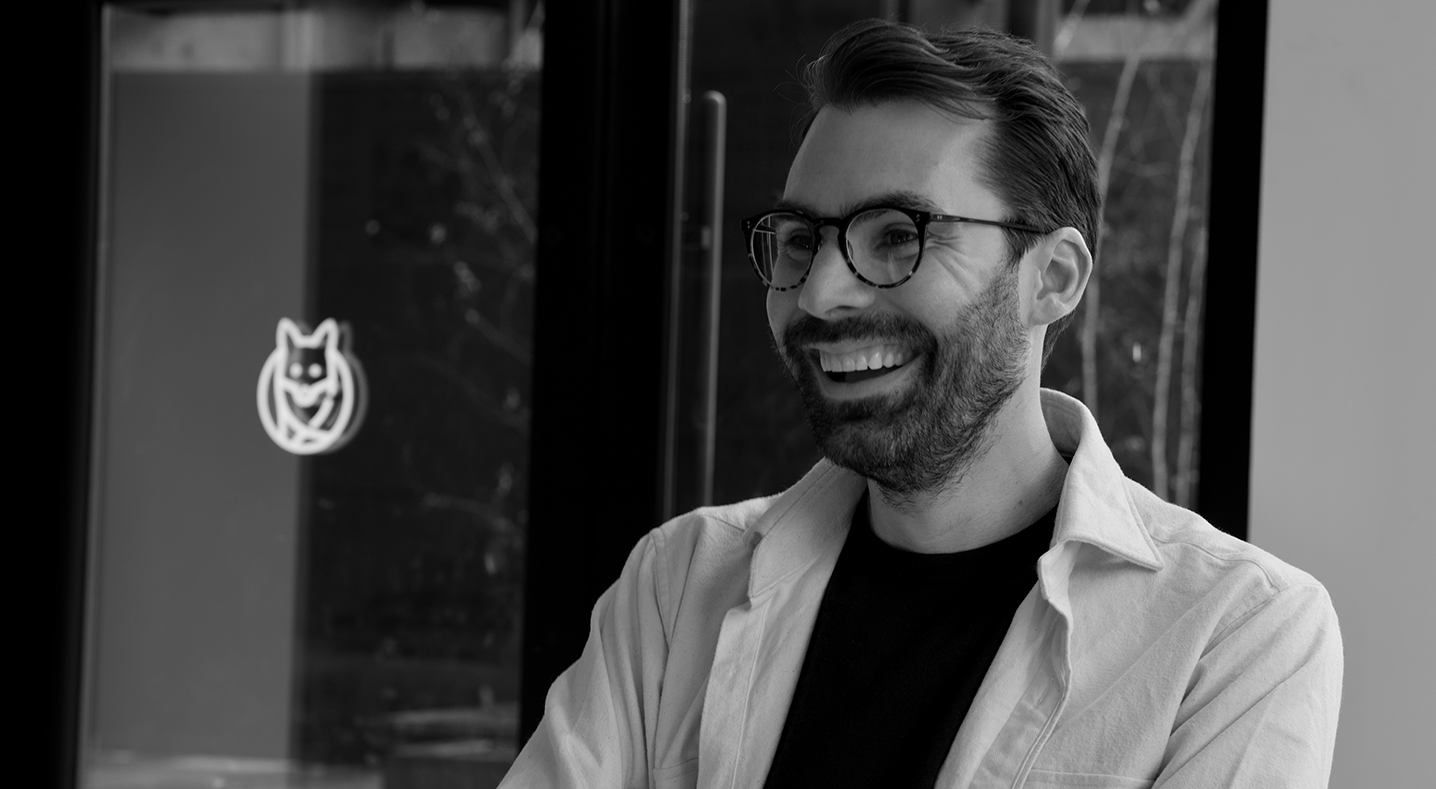
Editor’s Note: Mike LaVitola is the Founder and Chairman of Foxtrot. In this episode, Cornelius interviews him to discuss the brand’s growth and vision for creating a third place in society where customers transact and feel like they belong.
This interview’s been edited for length and clarity. Listen to the full version here.
Field Notes
— Everyday Entrepreneur | Everyday
— Mike LaVitola | LinkedIn
— Foxtrot | LinkedIn
— Chicago Booth | Chicago Booth
— Topo Gigio | Instagram
— Apple | Apple
— Peter Theil | Wikipedia
— Paypal | Paypal
— Sprite | Sprite
— Soho House | Soho House
— Cathay Pacific | Cathay Pacific
— Lambrusco | Wikipedia
— Charleston | Wikipedia
— Bozeman | Wikipedia
— MSU | MSU
— Midway Airport | Wikipedia
— Point And Feather | Point And Feather
— Ben Towill | Instagram
— Monocle | Monocle
— Giant | Giant
— DFW | DFW
— Chianti | Wikipedia
— Georgetown | Wikipedia
— Ilse Crawford | Wikipedia
— The Sensual Home | Google Books
— Graziano’s | Graziano’s
— Giardiniera | Giardiniera
— Chicago | Wikipedia
— Lake Forest | Wikipedia
— LinkedIn | LinkedIn
— Washington, D.C. | Wikipedia
— Dallas | Wikipedia
— Austin | Wikipedia
— Old Town, Chicago | Wikipedia
— Pinot Noir | Wikipedia
— Happy Returns | Happy Returns
— Venture Capital | Wikipedia
— Lettuce Entertain | Lettuce Entertain You Restaurants
— Stockholm | Wikipedia
— Third Place | Wikipedia
— Sauvignon Blanc | Wikipedia
— South African Wine | Wikipedia
— Brunello | Wikipedia
— Roussanne | Wikipedia
— UChicago | UChicago
— Cabernet Sauvignon | Wikipedia
— Master of Philosophy | Wikipedia
— Dallas-Fort Worth Metroplex | Wikipedia
— Southwest Airlines | Southwest Airlines
— Plano, Texas | Wikipedia
— Charleston | Wikipedia
— Providence | Wikipedia
— Bozeman | Wikipedia
— Memphis | Wikipedia
— Savannah | Wikipedia
— Scottsdale | Wikipedia
— Stockholm | Wikipedia
— Australia | Wikipedia
— Recess | Recess
— IKEA | IKEA
— West Town, Chicago | Wikipedia
Personal Insights and Chicago’s Best Italian Food
Cornelius McGrath: Lovely spring morning here in Chicago, not as nice as yesterday. In preparation for this, I was reading that you’re a boy from the northern suburbs, Lake Forest, correct?
Mike LaVitola: Yes.
Cornelius McGrath: Big Italian family, eldest of six, so a strange one to get started. What is the best Italian food in Chicago?
Mike LaVitola: It’s Topo Gigio, not particularly close. I think I’ve eaten there a hundred times, we had a rehearsal dinner there, I live behind it. It’s just, there’s no there’s [00:02:00] no pretension to it. There’s no show to it. It’s just fantastic food.
Cornelius McGrath: And what makes it so special?
Mike LaVitola: Just yummy. It’s like I said; they’re not trying to overdo anything. There’s no pretension to it. It’s just every time you go, you’re going to see friends. It’s fantastic. The wine’s great. It’s just a place that makes me happy. And it’s. It’s definitely they’re not; they’re there for the food and kind of nothing else about it. That’s how it was there. So I think it’s great.
Reflecting on a Decade of Foxtrot
Cornelius McGrath: So I saw on LinkedIn that you’re coming up on 10 years working on Foxtrot. I think you started it in July 2013.
Mike LaVitola: Yes.
Cornelius McGrath: You’re what? Five months away. I guess I’m curious, man. A decade of work. Does that surprise you? Do you think you’re where you’re at? Where you should be at? Did you think you’d be further?
Mike LaVitola: It’s a great question and it’s crazy it’s ten years. I think both, right? I think one, if you said, Hey, you’re going to be around 10 years from now, that’s a huge accomplishment. And to see what we built on that time and, with the team and the brand has been, it’s been amazing, but, I think at the same time, you’re like, Oh man, I wish we could have gotten faster and done more as well. Really proud of what we’ve been able to do, but really think we’re [00:03:00] truly just at the beginning of it.
Cornelius McGrath: Totally. And so my natural follow-up is, where do you think you’ll be ten years from now?
Mike LaVitola: I think when you go to a city, and you’re in an interesting neighbourhood, one of your first thoughts is going to be, Oh, there’s a Foxtrot over there; let’s go check it out. And right now, we’re in Chicago, we’re in D. C., we’re in Dallas, and we just opened up in Austin last week. So you can do that in sort of four cities now, and I think in another ten years, we’ll be in a hell of a lot more.
Foxtrot’s Expansion and Choosing Cities
Cornelius McGrath: Totally. So I wanted to. That was a related question, but I wanted to bring that up. It’s one, how do you choose your cities, and two, it’s almost becoming striking to me that you’re following the Apple store model whereby the neighbourhood’s quality is now dictated by whether it has a Foxtrot or not.
Mike LaVitola: That’s very nice of you to say. I think they have a headstart on us. How do we choose the cities? Comes down to products of real estate, right? So Chicago is an obvious starting point. I’m from Chicago. I was in business school here when we started it. We had, a really close at the time; we didn’t have connections. We just knew them as fans and customers of who’s roasting the best coffee, who’s brewing the best beer, who’s got new cool stuff happening and food and CPG. And there’s a ton of comfort [00:04:00] thereof, what should be on the shelves, and when it came to real estate, it was, where do we hang out?
Mike LaVitola: Where do our friends hang out? Where are the kinds of shops we want to be by and you just have a good feel from living there. So, as we look to be in new cities, if you looked at it on a spreadsheet, the cities that made the most sense, given that what’s worked well in Chicago were cities like Boston and cities like DC; I didn’t know anything about those cities.
Mike LaVitola: And so the worst thing we could have done was jump into neighbourhoods. We didn’t know with products we didn’t know and people we didn’t know, and just hoped that it was going to work. And so we did. What I think was a pretty non obvious thing, it went with Dallas next. Dallas is, in many ways, not; it’s nothing like Chicago, right?
Mike LaVitola: Chicago is all walking. Dallas is all driving. Even down to the product mix. Here, we sell a lot of Pinot Noir. In Dallas, it’s all caps, right? So delicate versus big. But anyway, what we did know about Dallas was my co-founder, Taylor, was from Dallas. We knew the neighbourhoods really intimately.
Mike LaVitola: We knew who those first set of partners were going to be. And so in the world of, everything about a [00:05:00] business is risky. We knew, Hey, if we opened this first door there like it’s going to work. Like we know the community. We know that community needs, and we had a lot of conviction around it.
Mike LaVitola: That’s how we’ve approached, really expansion since that is there’s what should work on a spreadsheet in demographics, what the brokers want you to do, but really it all comes down to, is that fit and feel right?
Cornelius McGrath: Totally. And you preempted one of my later questions. So, I want to circle back to Dallas because I agree. It’s very non-obvious. And actually, Peter Thiel says that great entrepreneurs often have. Like non-obvious or contrarian beliefs. So I wanted to ask you what contrarian beliefs or non-obvious beliefs that you have was Foxtrot built on?
Mike LaVitola: That’s a great question. I guess they’re obvious to me or when I started it, but what was the kind of founding idea? Okay, I moved back to Chicago from Austin. I was living in sort of these interesting neighbourhoods and knew that there was so much so much passion and so much, just like vigour happening in the food and beverage space here, right?
Mike LaVitola: Again, back to the bakers, the coffee roasters, the brewers, [00:06:00] and just none of that was being represented. In the shops that were closest to customers, which were these convenience stores. And so what was obvious to us was like, Hey, if we just celebrate these products and give them shelf space and make them accessible to customers, they’re going to eat it up.
Mike LaVitola: And like the reason that they’re not buying them now is they don’t have that choice. So for us, it was all about that; as we grew up, there was a big there’s some more direct answer to your question, but a big. Split in all of this kind of crazy funding in the last couple of years around quick commerce and delivery.
Mike LaVitola: And the obvious thing to us, which didn’t seem obvious to anyone else, was the interesting thing about that market wasn’t that you could get stuff delivered in 20 minutes. That’s like a that’s a utility, right? You could just pay to make that happen. But what customers were actually looking for was a brand-led experience.
Mike LaVitola: It was all merchandising-driven. All of the way we set up the company, what I’m into, what our team talks about every day is all around. What the products are? Is this the best [00:07:00] product at the best point on the shelf? And that’s where all of our energy went. So probably 90 per cent of our time goes to that and 10 per cent on the logistics.
Mike LaVitola: And it felt like everyone else in the market had that in the opposite direction. And so what you saw was them opening up in 50 cities at once, but never. Quite capturing the zeitgeist.
Cornelius McGrath: Totally. And so reverse showrooming, I feel like that was an idea that like really had its peak probably in like late teens, and a great friend of mine went to Happy Returns, which was acquired by PayPal.
Cornelius McGrath: I don’t know if you’re familiar. Yeah. How much of reverse showrooming was in your business model of this idea of if we can get people in to pick up, we think they’re going to go and grab three other things?
Mike LaVitola: Yeah, it was really, I’d say it was less about that and more thinking back to, a time before I was around, just like what people used to use the corner store for, right? And I think this really hit us when we opened Old Town. I would walk in there on a Saturday, and I would see my brother getting back from a run, so I get to see him.
Mike LaVitola: I’d see one of my wife’s friends with another friend kind of dining. I would see an [00:08:00] old buddy from college, and it was all on this corner of Old Town, which is a real neighbourhood y neighbourhood. And to me, it was like, that’s what’s missing in the space.
Mike LaVitola: It’s not even necessarily the products of the use case. It’s this gathering space that people should go to get the things that they buy most often. And it should be a beautiful environment with good music and friends and people around. And versus you’re trying to over-optimize something for VC dollars and running it based on Sprite Cheat Sack, that’s gonna get you to one answer.
Mike LaVitola: But what was really missing from the space was this hub and this community, which sounds really soft, but that’s really what we’ve been after. And so the products we sell or the cafe that we set up here like it’s all secondary to creating a space where. People want to be in their neighbourhoods. And once you create that space, they’re naturally going to transact.
Cornelius McGrath: Do you have benchmarks in terms of space make for people that you thought had done a good job of making spaces that people wanted to hang out in?
Mike LaVitola: Yeah. Being in Chicago, then, let us entertain you guys just do a phenomenal job of creating [00:09:00] spaces. And different brands that people just want to spend time with, I think they do just an incredible, incredible job there. We’re staring at the Hoxton. I think they’ve also done a really nice job of creating spaces with music, with design, with high hospitality kind of experiences that, that that, people actually want to, people want to hang.
Mike LaVitola: Another space, not necessarily in Chicago, but in every one of their stores I’ve been to, I think they just do an incredible job of making people feel welcome in a way that just doesn’t happen to retail anymore, is Sid Mashburn. They are, they’re incredible. So they’re based out of Atlanta, but they’ve got shops in where Dallas DC and a few others.
Mike LaVitola: So it’s a men’s Retailer. They’re selling shirts and pants like anyone else does. The product quality is great, but when you walk in. They’ve always got vinyl on the guys at the shop are always there to help you out. There’s never any kind of sales pressure, and you end up spending 45 minutes or an hour in there when you only need to be in there for five to 10 minutes.
Mike LaVitola: And it’s that sort of placemaking people driven [00:10:00] environment that I think is really missing from retail these days.
Cornelius McGrath: Absolutely. I thought you were going to say, SoHo House I think it was the Crawford is amazing, and the spaces she creates for Cathay Pacific and airline lounges are fascinating. SoHo, it’s incredible. I can just never get into Brandon’s restaurant. They’re too dark.
Mike LaVitola: No. It’s a little bit Armory to Jailhouse right down the block from me and I got, that was probably the place to eat. Yeah. Certainly drank the most last year. SoHo House does, from a design perspective, it’s, I’m like just floored with what they’re able to do. And, the ambition that they take in spaces, is incredible, right? There’s an easy way, there’s a quote, an easy way to do what they’re doing. And that in a lot of large hotel chains. And it seems to me like they take the hard, like even down to the art curation of every single element of what they do and it really makes a difference.
Cornelius McGrath: So, how successful do you want to be?
Mike LaVitola: What kind of question is that?
Cornelius McGrath: Just with Folkstra, how big do you want to make it?
Mike LaVitola: Yeah. I think it’s less of being big for big sake and more about taking the experiences that we’ve seen in our [00:11:00] first batch of stores and realising that those can really translate across the U. S. and across the world. I always use this example. My wife and I got married three years ago. And I wanted to go on a beach vacation because I’ve been working for seven years straight on this. And she wanted to go to the Nordics, so we went to the Nordics. Anyway, we’re, we’re like walking around this super hip neighborhood in Stockholm, right?
Mike LaVitola: With all the cool cafes, like amazing art galleries. Of course, we couldn’t afford any of it, but they’re fun to look at. Great. Just everything that you would think and the thing on the main corner of the main kind of road there was just this crummy international convenience store.
Mike LaVitola: And I was like, how does this international city surrounded by this beautiful neighbor and all these cool people, the place that they are going to and the option they have is still this just crummy place of last resort? And I just use that example. Cool. to say, it’s fun that it works on a corner and foot market here in Chicago.
Mike LaVitola: It works in Georgetown, DC. It works in a strip mall in Dallas. And if you’re working those at different kinds of places, what gets us really [00:12:00] excited is finding out about more and more neighbourhoods across the country and, eventually, internationally and getting to put their own spin on Foxtrot in those.
Cornelius McGrath: Where does Foxtrot not work?
Mike LaVitola: That’s a good question. We’re not sure yet. At the end of the day, the products can change, but it’s about great coffee, great wine and tasty treats. And I think people everywhere want that, right? How much or how little you dial those elements up is probably going to depend on the neighbourhood you’re in, like base goods we’re selling is something everyone can enjoy.
The Role of Private Labeling in Foxtrot
Cornelius McGrath: Totally. So tell me a little bit more about the private labelling you’ve been doing. I, that was a little bit at the end of the Chicago podcast seems really unique. I’m just so curious: where are you going to take that? And obviously, we’re here today because of Monocle, a brand that’s probably done private labelling.
Mike LaVitola: Incredible. They’re a huge inspiration. Yeah. So private label for us is about two things. We we spend a lot of time to make sure that we’re not this super boozy. Overly expensive special occasion-only place because while I love all those products, if you can’t come in on a Monday night and grab a great 15 bottles of Chianti, then it’s hard [00:13:00] to be your favourite wine shop, right?
Mike LaVitola: Same with coffee, same with all this stuff. And so, all to say, pricing matters a lot to us to ensure that we can run. The business in the way that we want to and onboard candidly, all these small makers and not gouging on price, we’ve got to be able to make up margin in certain places.
Mike LaVitola: And so we think of it as a barbell while we’re on one end; it’s stuff like our gummies and dried nuts, right? Basics that we love that we source spent a ton of time on, like the gummies, for example, were imported to Sweden. They’re incredible. We have a ton of fun on the packaging, and that’s about getting an awesome quality product to the consumer at a good price while still driving our business.
Mike LaVitola: The other end of it is these brands we concept and get to make up and get to make with friends, which we love. So we’re staring right now at Mouthy Wines. Those are three of the private-label wines that we launched Last year with Samantha Sheehan out in California. What do you think of what really sells in the wine category?
Mike LaVitola: It’s calves, it’s pinots, it’s Sauvignon Blancs. What we wanted to do was say, Hey, that next level of wine consumer is [00:14:00] really looking for something new and interesting. Can we put out something that tastes fantastic? That’s at the right price point and that they can’t get anywhere else. So, on the left there, that’s that’s our version of an American Lambrusco.
Mike LaVitola: That’s fantastic. We’ve got another one called head to toe, which is a whole cluster red. And that was our best-selling wine last fall. Beautifully packaged, great value for the consumer, super yummy. And it gets. Our customers may only be buying cabs or pinots to experiment with something new first because they think the bottle is gorgeous and the store is good, but then they repeat. And for us, it’s all about introducing what our sound’s into or what our head chef is into to new consumers.
Cornelius McGrath: Totally. And you won me over. I’ll be honest. I’ve got one right down the street: merch milestone. Had never really bought wine there before. Went on Friday. Me and my fiance did some pre-cancer stuff, and I’m a big natural wine guy, so I found a red pet gnat, which, honestly, a red pet gnat you just don’t see, and it was South African; the life. Went down to treat Friday night.
Mike LaVitola: And that’s [00:15:00] exactly. I think people think about shops like us of, they’re gonna carry a bunch of natural wine, because the labels are cute, and any only corner store should carry a bunch of natural wine are some, and I talk about those all the time.
Mike LaVitola: Most natural wine sucks. Like it does not taste good. And I think that’s where we can really serve in the market is we have a ton and myself too, right? Like I am curious about natural wine. I want to learn about it. I want to try it, but I don’t want to spend 20 bucks on a bottle.
Mike LaVitola: And then. Pretend that I like something that I actually don’t. And wine is such a great example of if we’ve got a bottle of wine on the shelf, like it beat out all the other, ones at that varietal, at that price point, and we stand behind it, and we can tell you a story about it. And so that’s where I think we can really, fit in the Zeitgeist here is giving people confidence to try new things. Because if it’s on our shelf, it really means something.
Cornelius McGrath: Is there any element, though, of private labelling that’s awkward for the partners that you’re working with? Because there is an element that if someone finds a line in your store, then you’re getting all that brand equity and that credibility that isn’t necessarily driving them back to the, to the main [00:16:00] hub.
Mike LaVitola: It depends. Again, it’s that barbell, right? So if you look at our lower price lines, the kind of everyday table lines that really are a game of can we find something delicious to the customer at the lowest cost, but something like mouthy, we proudly say all over that label that we work with Samantha, how many times we’re out at the vineyard with her, Dylan or Sam is out there literally tending to the vines at some point.
Mike LaVitola: So when we find a partner that we’d like to work with, we want to celebrate them and give them as much credit or, more in that case than ourselves. So, it depends on the product and whether you’re trying to replace a commodity or introduce customers to something new. But they both have their place.
Cornelius McGrath: Are you familiar with the concept of the best stores in Japan and China? It’s really interesting and I’m curious to get your take. They basically just sell one SKU of an item. So, one bottle opener, one wine cork, one glass. How do you react to that?
Mike LaVitola: That’s very similar to what the initial idea for Pockshot was. Like we were going to have, one gin, one whiskey, one chip, and [00:17:00] all of those things. And then, I still love that idea, but the reality is there are different price points and different occasions. But we have a bit of extension like that again, like on the wine front, right?
Mike LaVitola: So we have one Brunello, right? Like it’s one, you’re probably only going to buy at the weekends. We went out and we found the one that we love the most, right? We’ve got one 25 cap. We’ve got one. 15 Rosanne. So, for us, it’s like trying to find the best product at the price point for the consumers that they have faith across all of those.
Mike LaVitola: And when we introduce new products to consumers, cause that’s so much of what I think folks like about the journey here is you’re going to see brands that you’ve never seen anywhere else. And if you’ve got confidence in us from our old picks or just carrying your old favourites and they’re priced right, then you’re much more apt to take a risk on a new product because it’s backed by the testing of all the other ones.
Cornelius McGrath: Totally. So, I asked you earlier about the non-obvious beliefs. A lot of them have proved to be right. What’s something you’ve changed your mind on that at the beginning, you may be held really close to yourself, and now you’ve let go of retail?
Mike LaVitola: When we started, we were online only. There was no [00:18:00] retail, right? So the first version of the company was in under, in, our dream version of a corner store, in your phone, and it was all under an hour delivery, and it was all baked in this great app experience. And we ran it that way for a couple years, and we, realised That to really build a company we wanted, we had to get a hold of our own supply chain.
Mike LaVitola: We had to carry our own goods. And that was the reason for opening the first store. The first store, about three blocks away, was really just meant to be a warehouse. But because of zoning laws, we had to make it retail. And, of course, none of this neighbourhood was here. And as the neighbourhood grew up around us, we saw customers in the store.
Mike LaVitola: We saw customers hanging out. We saw how they shopped. And we saw that they needed this like true third place. That’s what really opened our eyes to what retail is. It’d be. And the most obvious shift for us was going from, Hey, we’re going to open this thing, get delivery going in every city across the U S maybe one day, it’ll be super fun. We’ll get to open up our own store to now. I think most people find out about this first through retail and then go on an online journey.
The Journey of Foxtrot: From Rejection to Success
Cornelius McGrath: Totally. So, I do want to bring this up. Part [00:19:00] of the reason I love your entrepreneurial story so much is just because of the whole mPC piece of it. I’m not getting in. But then convincing them to let you in. So first, I just wanted to say I feel a good idea is somebody starting a business plan competition, but it’s all the teams that didn’t make it to the finals. And then second, I think it was a cool full circle that you, Chicago, ended up at besting.
Mike LaVitola: Yes. Awesome.
Cornelius McGrath: This is fantastic. So I’m just curious, like when you think about university entrepreneurship, academic entrepreneurship, like what did you take from it?
Mike LaVitola: If anything, we MBAs are a weird bunch. It’s they’re very. You don’t get into one of those programs unless you’re really driven. You can test well, and you’ve had a good career beforehand. So all of those things add up to people who are really good at getting things done and checking boxes to get into things. And that’s helpful for entrepreneurship, but oftentimes it is it’s a different way of thinking.
Mike LaVitola: And like I think, and I talked to the MBA class about this all the time. I think a lot of them view NBC as a way to get another notch or win this competition, which we did not at all. Like I said, I barely got in. Yeah. So for us, like we [00:20:00] used it as a time to figure out like, is this a real idea?
Mike LaVitola: Can it work? And what’s going to have to happen to make it work? And so it was so valuable about that experience for us. It was just time and space to go get things done and also start to get your ass kicked, right? So the most viable thing that happened for us in NVC was not getting in because I had to be like, okay, Do I actually have conviction in this idea or not?
Mike LaVitola: And I’m pretty sure we were the only team to get in and then also went, and I don’t beg convinced I don’t know what the right word is. You know Professor Kaplan to let us in, and in many ways, that’s the first Entrepreneurial lesson. Like all you do is get told no. Totally. Every day, constantly, for like years.
Mike LaVitola: So if you’re gonna just stop when someone tells you no, then yeah, this ain’t the game for you. Are you immune to the word no at this point? At this, oh my god, yeah, totally. I have no, I have, oh, yeah, absolutely.
Cornelius McGrath: And you’ve been in the game long enough where I’m assuming there’s been no’s outside of MVC that have become yeses.
Mike LaVitola: Every day. Oh, yeah. You think of everything; fundraising is the most obvious one, but even back to [00:21:00] the early days, like we had no brand, no one knew who the hell we were. We were in Chicago, which is a big city, but it’s off the coast, and all the stuff I was super into on the brand side were, I would reach out and try to be the first retail partner for a lot of these brands that I loved.
Mike LaVitola: And either wouldn’t respond or wouldn’t pay any attention. And why would they? We were like nothing. And so I would try to carry these products that we were like; Monocle was a great example. Like I tried to carry that magazine. I don’t think we even got a callback. So who is this random, quasi?
Mike LaVitola: Plus, a convenience store in Chicago. And so you have to be persistent, and you have to figure out what is important enough to fight for. And if so, what’s going to get that person on the other end to take a chance on you? And so, in the beginning, it’s all about getting people to take a chance on you. Then, as you build the brand and you build equity, then it, it flips a little bit.
Cornelius McGrath: And was there a watershed moment for you as you think about the loss? Nine years and eight months.
Mike LaVitola: I think opening the Old Town store was really an interesting one. COVID screws up timelines, right? I think it was like [00:22:00] 2018. That time we had, I think that was like our end store. Obviously, things have been going okay, and things were busy and things were working, but when that store opened, it was like, whoa.
Mike LaVitola: It was hacked, it was lined out the door, and it was customers. Coming to us for all the reasons that we wanted them to come to us. So they were super into the interesting wines that Dylan was carrying. They were lining up in the morning for coffee. They were taking a chance on these new, fun beverage brands.
Mike LaVitola: And there was just such a vibrancy in the store that transcended shopping, right? Like this wasn’t a place where people were. Like, oh, I’m out of milk. I’m just going to go run and grab it. That was happening, but it was much more like the sense of discovering energy in the story that you could just feel. And I think that’s when we knew, okay, like this can really be something.
Cornelius McGrath: So you talked about your fundraising woes a lot in prior interviews. I’m curious: what was the disconnect there reflecting on it?
Mike LaVitola: I don’t know. It’s part of it was being in Chicago. Part of it was being a first-time founder. Part [00:23:00] of it was probably shifting from e-com to retail. Part of it was probably tripling down on retail. Like all of those were non-obvious, even in the past couple of years, we were fundraising in countless meetings and you have these investors who have a different view what of what will work than you do.
Mike LaVitola: And oftentimes, it’s like, how fast can you scale and just get doors open? And at the end of the day, it’s not so hard to open up. A door and put Foxtrot on the top, it’s really hard to find the right space and the right neighborhood with the right design and the right employees and the right stuff on the shelf.
Mike LaVitola: And that time take, that stuff takes time. You can do it and you can pick up the pace, but you can’t you can’t copy and paste it over and over again. And so I think the probably, all too stubborn conviction we had and the in the right way to build the brand was at odds oftentimes with what investors wanted to see.
Mike LaVitola: And now, who knows we’ve got a great series of investors now. And, we’re also [00:24:00] transitioning from, like the, I think that the brand has been remarkably consistent all along. Part of it is cause it’s all do and think about, but what fucked up the brand has really been consistent. What has really changed is how that shows up to consumers.
Transition from Online to Retail Space
Mike LaVitola: So going. From online only to then a retail space. And now the retail space is over half our sales, or about half our sales are coffee and cafe. That transition has really taken hold, and the company is now entering. So it’s okay. We’ve now got the model, and we know what consumers are looking for when a space like this opens up in their city. So now it’s, how do you keep that magic while replicating it?
Expansion into Dallas: A Deep Dive
Cornelius McGrath: So, a question I brought up earlier was around Dallas. I’d love to go deep with you on this. So totally non-obvious. I went, was last in Dallas three weeks ago. I flew into DFW, which I love. I love that Southwest was born in Dallas. I just think it’s got so much innovation. But Dallas is like a state, right? And it’s vast, and Dallas Fort Worth is huge. Downtown, [00:25:00] honestly empty as shit, basically. But Plano East Legacy, some of these smaller enclaves are fascinating, but it’s very Tommy Bahama, a big old steakhouse. And I know your co-founder was there, so that makes a ton of sense, but just give me the lowdown on, and then you mentioned driving because when I think about Foxtrot, I think on my two feet. So just give me the actual what was data that made you say there was no data.
Mike LaVitola: It was a gut feeling. Look, the bet is, if we were trying to build a Chicago-centric kind of concept, we just would have stayed in Chicago, and we wouldn’t have tried to raise money, but Our ambitions were much bigger and at the highest level, Dallas is what, the fifth biggest city in the country.
Mike LaVitola: So, if it doesn’t work in Dallas and you don’t have a concept, right? And as I said, anyway that we analysed it, the next market should have been DC should have been, which is now our second biggest market. It should have been Boston. But we knew what makes it special is understanding the neighborhoods and understanding the [00:26:00] products.
Mike LaVitola: And we totally understood that about Dallas. Our first store in Dallas was in Uptown. We took this bar that had been this kind of legendary sports bar, and the building was totally falling down. It was an awful building, but it was this sort of iconic, not iconic, we thought it could be iconic, corner in Uptown that had a nice amount of density behind it, so we knew we could get some walking traffic, and it was the right kind of clientele for Dallas.
Mike LaVitola: And so anyway, I had faith in the site, knew what to put on the shelves, and ultimately, we’re like if we get those two things right and people don’t come that this isn’t as big or as relevant of a concept as we thought it could be. But I didn’t want to sacrifice either of those two things.
Mike LaVitola: And so we opened this. Really cool-looking store with a ton of local products, and did a really good job recruiting the team that the store opened up as the best store in the chain, off the bat. And so that, that was a huge moment for us. And the second store in DC is the same thing.
Mike LaVitola: It took us another 18 months to open up DC, but by [00:27:00] the time we had done that, now we had some real data of what matters, where to put these stores, how to underwrite them and, make making and can only just had time to spend a ton of time in that market to understand.
Exploring Potential Cities for Expansion
Cornelius McGrath: So I’m going to throw some cities at you and I just, while I know you probably can’t speak to expansion plans, I just want to get your gut reactions. Charleston.
Mike LaVitola: Oh my god, I love Charleston. I spend probably more time in Charleston outside of Chicago than in any other city. I love Charleston.
Cornelius McGrath: I can see a great future for you there.
Mike LaVitola: I, yeah, the sun is shining and the vibes are good. You got the old English-like cobbled street. It’s so cool. Yeah. I would love to open up and try and same thing.
Mike LaVitola: There’s such a great. All these names are coming to my head now, but like you’re actually probably seen over Index and Charleston products on our shelves. Right now, cause of how much time I spend at that market and just, there’s such a great culinary scene down there. Yeah, my head is just running with all the Charleston products on the shelf right now, so good. Yeah, okay, I Love Charleston. That was top of my list.
Cornelius McGrath: I’m gonna throw out a rogue one. Providence, Rhode Island [00:28:00]
Mike LaVitola: I have never been there.
Cornelius McGrath: Good to know.
Mike LaVitola: Yeah, Bozeman. Bozeman would be super fun. You go MSU, Bozeman would be super fun, and yeah, Bozeman would be, and again, that kind of energy is like exactly what, what gets us going.
Cornelius McGrath: Totally. Not sure you mentioned another interview, so I don’t think that’s fair. Savannah, whatever. Scottsdale, I think those are obvious. One I’m gonna throw out here cause I think it’s the next Chicago. Do you wanna have a guess?
Mike LaVitola: I have no idea.
Cornelius McGrath: Memphis.
Mike LaVitola: Memphis? I haven’t spent a ton of time there. It’s got the right ingredients in terms of real neighbourhoods. Interesting people, doing interesting things on the food side. No pretension. And it’s just fun, though.
Cornelius McGrath: It’s got a soul.
Mike LaVitola: It’s got soul, and good for us in these cities is you can get some really cool buildings without having to, You know, overextend yourself financially, right?
Cornelius McGrath: Love Memphis, and fun fact; actually, by the way, the reason Nashville overtook Memphis is because the city government of Tennessee decided to move there in the 90s.
Mike LaVitola: Really? [00:29:00] Huh.
Cornelius McGrath: So there’s a big brother, little sister vibe there. Yeah, what’s happening in Nashville? It’s just unbelievable. Amazing. Okay, that was really fun. Europe and Australia. Just would love your two cents on that.
Mike LaVitola: Actually joined us. President, we talk about your balls going back to that Stockholm example, like it’s, I feel like it’s even more relevant in some European cities and some American cities, right? Like we’ve proven that it works in a driving city, but certainly I think the magic of it is just being able to stumble upon a store and pop in. And obviously, that’s all. That’s what that’s what Europe is. I’ve never been to Australia. I’m dying to go to Australia.
Cornelius McGrath: I’ll have to give the one a hot. You like Melbourne.
Mike LaVitola: Yeah.
Cornelius McGrath: Great coffee, walkable. Sydney, I didn’t love.
Mike LaVitola: Really?
The Art of Curating the Best Products
Cornelius McGrath: I thought it was really plain. It was raining. Not a lot to do. Reminded me of a worse London. But those are just my opinions. So I guess you, you say you, you stock the best stuff. Who decides what the best stuff is?
Mike LaVitola: The team. When we say the best, it’s not the fanciest. It’s not the most expensive. It really is is this the tastiest version of this product we [00:30:00] can find?
Mike LaVitola: And what. As I mentioned in the early days, we were begging our favourite brands to let us carry them, now it’s a bit of a different dynamic where a lot of the new brands want to come on our shelves are launching a Foxtrot, and while it’s really fun and flattering, it also means we are inundated with all these new, bougie millennial brands.
Mike LaVitola: Gorgeous packaging, the product sucks, and it’s more expensive than whatever the product they’re trying to replace is, right? And I just had to say what gets on our shelves is our favourite thing; of course, when there are new products we love, we want to champion them, right? Think of things like Recess, Ikea, or those products that actually taste great, that are priced right, and that are super yummy, and doing something new in a category.
Mike LaVitola: But, oftentimes our favorite products are something that’s been around for 30, 40 years. They’ve not thought for one second about packaging, right? It’s almost to their detriment, but just tastes fantastic. And so you’ll see that kind of stuff all on our shelves, too. And then I, I think, is a reference for brands that have been doing it the best for really long periods of time. [00:31:00] What’s the best salt or olive oil or balsamic or that kind of stuff?
Mike LaVitola: So anyway, it’s a sort of mix that it’s a high, low mix. It’s a, it’s new versus old mix and that kind of melting pot creates an interesting environment, and Kindle is where most of our tech has been written. We have a website and app that are really great shopping experiences, but most of our technology is sitting there on the backend that allows our merchants to pick whatever product they feel the most passionately about and not have to overly worry about the supply chain on the backend.
Mike LaVitola: And we have 400 vendors for the store, which is insane. You should have 20 vendors for the store, but that’s where the magic is, and we can use a lot of our engineering time on the backend to sort that.
The Role of Technology in Managing Vendors
Cornelius McGrath: Is that different from the old town store and the Riven old store or not?
Mike LaVitola: Within a city, then, within a city, they’re fairly consistent, but city to city, there’s a lot of uniqueness.
Cornelius McGrath: Like I say if you have a store in Westtown and I know you already do something with metric, right? That’s an obvious part.
The Importance of Local Partnerships
Mike LaVitola: Totally. Yeah. Yeah. Yeah. That’s fascinating. Now, it’s been fun instead of just being local for local sake; obviously, we love local. That’s why we [00:32:00] started it, but it’s bringing the best of different cities in, to here. So we’ve got great products in Austin that now we’re importing Chicago out to DC. And so as we continue to grow, you’re like seeing these brands that are; a brand I love is Jim over at Graziano’s, and I use our clothes on Mondays to do yourself a favour and go over to Graziano’s sub shop over there. His Giardiniera is incredible, right?
Mike LaVitola: So we import that every every market across the country now, right? So, if you’re in DC, you might not know that you needed a Chicago-style Giardiniera, but having that thing pop up gives us. So much joy, and getting to work with him on growing has been fun.
Cornelius McGrath: Are you in any airports yet?
Mike LaVitola: No, but that’s mostly because airports are. It’s a nightmare. A shitshow to manage, but I can definitely see Foxwood airports.
Cornelius McGrath: Because it’s hilarious that Point and Feather and Hovadin are the two staple brands of Midway Airport. And then you’ve got a summer house.
Mike LaVitola: I’m going to go silent on that.
Cornelius McGrath: But yeah, that’s the thing. This is more of just a, off the record, but I just think that’s such an opportunity.
Mike LaVitola: It’s, I know we, we will be there someday for sure. We, it’s like [00:33:00] everything with the city, it’s a maze of God knows what. But we’ll have them there soon enough.
Cornelius McGrath: So, just some quotes from prior interviews that I love, that I just wanted to repeat. Boxstraw is a space for your dream basket of everyday goods. If you could only take one thing from this entire store and you could only sell that, what would it be?
Mike LaVitola: Oh, eh, good question. The hotpot answer is probably the breakfast tacos.
Cornelius McGrath: That’s because you’re an Austin boy, I think.
Mike LaVitola: Chicago boy who fell in love with Austin. But it’s still our number one selling product.
Cornelius McGrath: And they’re Austin’s just obsessed with breakfast tacos.
Mike LaVitola: I think other people will be, too, once they discover them. Yeah, but if I’m going to take on it, it’s going to be those.
Cornelius McGrath: Okay. Alright. Another quote that I just loved. The feeling you get when you’re in the store that’s the brand. I’ve heard others; I’ve actually heard this great Charleston restaurateur, Ben Toa. I don’t even know him, but he talks about hospitality being a feelings business. Do you agree with that?
Mike LaVitola: Yes, a hundred per cent. A hundred every doing it this way is a hundred times harder than doing it the standard way. But every [00:34:00] one of those small decisions this is This is Ben’s art. I fell in love with his art. Who is doing cool stained glass like that now?
Mike LaVitola: He’s got a studio in Chicago, and we were so pumped to commission that piece. And to me, that piece makes the space; nothing’s gonna; there’s no book that’s gonna tell you that piece is gonna make the space, and no customer is gonna tell you that either. But it just it just does.
Mike LaVitola: It makes it happy. It makes it interesting, and There are small decisions like that across the entire store that are different in almost every store that make a huge difference. And so for us, I think that’s the, that’s a challenge, but also the excitement is like, how do you keep that specialness and the uniqueness in the store, right?
Mike LaVitola: The decision isn’t, Oh, that piece is really cool. Let’s commission a hundred more of them and put them in every store. It’s finding that specific thing in each market that brings people joy.
Cornelius McGrath: Have you, I mentioned earlier, but have you read Ilsa Crawford’s Sensual Home?
Mike LaVitola: No.
Cornelius McGrath: Okay. I’ll send it to you. I think you’d love it. But she, I think, was the first designer to get people to think about spaces through the five senses. And so that was it. [00:35:00] What can you smell? What can you touch? What can you hear? What can you taste? And that’s what drove Soho, Cathay Pacific and First Class Airline Lounge. She invented that.
Mike LaVitola: It’s a feeling, and the music matters, too. It’s taken a long time to get that right. But, if you walk into a space and all you hear is the hum of the fridges like It’s just dead. Music makes such a big difference. And lighting. Like how many convenience stores are thinking about if you, now the days are getting longer, thank God.
Mike LaVitola: But if you come here around six 30, these lights are going to dim, the overhead ones go off, and you’re going to get a totally different feeling in this space than you get on a bright kind of sunny morning, and all those things really matter.
Cornelius McGrath: Totally. Just another thing I really appreciated you sharing was, on the Chicago podcast, two weeks with missing payroll, five times within 12 hours, two to three. How the hell did you get out of those moments, man?
Mike LaVitola: I don’t know. I still have PTSD. I don’t know. We just had a lot. And we just have a, if you spend time in the stores, you just gain that connection, right? They’re busy, but they’re full of life. They’re full [00:36:00] of all different kinds of people too, which is really exciting.
Mike LaVitola: This store has young workers. You go up to Southport. It’s all young families. You go to our Georgetown store in DC. It’s a mix of, college kids and people living in these gorgeous homes that are in their whatever, the fifties and sixties, and they’re all having a similar a similar experience that they can’t get anywhere else.
Mike LaVitola: I’m like, that’s what’s really exciting. I don’t know. I think entrepreneurship is a lot about just putting your head down and figuring it out when you definitely don’t want to keep putting your head down and figuring it out. But ultimately, the only way is through.
Cornelius McGrath: Do you guys own the real estate?
Mike LaVitola: No. That’s that we’re integrated in a lot of ways, but that’s probably one bridge too far for us, so we lease everything.
Cornelius McGrath: Wait, is that potentially part of the future?
Mike LaVitola: I don’t think so. Given the way that was, we’re set up, it’s we much more go into partnerships with the landlord. They’re investing, significant capital into the space for us to create this is such a great example. We’re friendly with Jeff, who’s the developer, right? So he has a big Gortz building going up. He wants something like a fox right on the ground floor to [00:37:00] monetise the space and to draw traffic and so we, we view those, very much as a partnership.
Cornelius McGrath: Fascinating. Your use of competition. This is like the cool things about the business section. Your use of competitions up and comers, I was doing some reading about. That’s fascinating. What was the reasoning behind that, and what’s been the outcome other than just identifying really cool brands?
Mike LaVitola: The up and comers, so much of what our team spends time on is. Finding, tasting, and discovering these new products. And when we find these new products, like oftentimes, like we are the first retail partner for them. So they don’t have, they’ve ever heard of the supply chain. They don’t know what a distributor is.
Mike LaVitola: They don’t want to price anything. They might not even have labels. And so I’ll just say we were doing all of this hard. Work because we love it to to find these brands, we would bring them in, they would gain sales, gain notoriety, then take those sales and then go into other retail, which is all good.
Mike LaVitola: Like that’s the natural evolution of retail, but we looked at ourselves like, Hey, like a, we’re not getting too much credit for this and be like, are we casting a wide enough net to get folks who don’t happen to be in Chicago or [00:38:00] Texas or DC. And one was really building the brand around, Hey, if you’re doing something new and interesting in food like we want to partner with you.
Mike LaVitola: And then to be able to cast a wider net, whether it’s BIPOC or women-owned brands, to know like we’re open for business and we very actively want to get them on our shelves. And so it’s been an invigorating kind of way for the team to come together and. There are probably 30 or 40 brands that have now come to that program; even though there are only two or three winners, many more of them actually find their way onto the shelves.
Cornelius McGrath: It’s MVC, but repeated, right?
Mike LaVitola: Yes.
Cornelius McGrath: It’s you figure it out. You’re bringing up something interesting, which is editorial. Which, I would say, as a brand, is not something that is cool right now. How much of that is the future vision? Because it would be very easy for me to imagine a day when it’s like, Is Foxtrot’s list of, up-and-coming brands that you should be checking out?
Mike LaVitola: Yeah, so I think a lot of our editorial now lives in the app and lives in reviews. So if you look at our wine section, for example, and you go. If you’re looking at it, I don’t know about you. I still can’t pronounce half the old-world wines, right? It’s Vino needs a pronounced dysfunction totally. And, and so what happens and like [00:39:00] people don’t buy them because they’re like, Oh, I see a Cabernet from California.
Mike LaVitola: I know what that is. So I buy that, but there’s so much amazing wine out there. And I’ve had the benefit of. Having Dylan or some on the team now who I get to talk to the time and educate me. And so we’re like, Hey, we’ve got to get this content in this editorial to introduce people to the wines that you are super passionate about cause otherwise, they’re going to keep buying the same stuff.
Mike LaVitola: And so if you go on our app now and you look up a wine, probably about 30 to 40 per cent of them now have none of the editorial tasting notes, but little videos of Dylan telling you in real people speak, not fancy wine language of like why he’s super into this wine or that wine. And so that’s where we’ve like really started to explore content and build up the brand that way. And you’re going to see that extended a lot of different things, too.
Cornelius McGrath: Yeah. Fantastic. I think that’d be great. How about something like this? And was Bi-Rite a benchmark at any point?
Mike LaVitola: Bi Rite’s fantastic. They are, definitely more of a traditional grocer, but as, as far as like being an important part of the neighbourhood, meeting consumers’ needs, and being just. They just crush it. So they’re super, super inspirational.
Cornelius McGrath: Yeah. An amazing Y section. So, are you guys low-key the best date spot in the city?[00:40:00]
Mike LaVitola: We have heard the most cost-effective date spot in the city. We see a lot of that going on. It’s fun. We didn’t set out to do it, but especially now, going out has gotten so expensive; your point, we, when we started seeing that maybe three years ago, folks coming in, grabbing a glass of wine and trying to make these dates.
Mike LaVitola: And then, it was super cool to see, but we still have this super heavy lighting up top, and the music didn’t change. And it was like, people trying to make it happen. And so we’ve guided that thing now where I think there’s definitely more of a vibe at night.
Cornelius McGrath: Which is really fun to say cause I had a friend. I told a few people I was interviewing you, and I was taking in questions. Yeah. Yeah. And one friend of mine, Brian, was like, my thing used to just be, You know, baguette on Wall Street, sunshine. I come back in the evening, we’d have a lovely little date, a bottle of wine, and then if it went really well, we’d go out to the next bar.
Mike LaVitola: Huh. Absolutely. Yeah. Yeah.
Cornelius McGrath: That’s, that’s fantastic. And was that intentional? I guess that was my real question. Was that something you learned?
Mike LaVitola: No, totally learned. Totally learned. We, but again, I think you have a license to, we have a license [00:41:00] to do that because of the brand and because of the space.
Mike LaVitola: Like making all those small decisions early on put you in a position for, customers to essentially take a risk with you and take the chances, and once you see something working, then you’ve got to double down on it.
The Future of Foxtrot: Expansion and Membership
Cornelius McGrath: Totally. So where’d you go from here?
Mike LaVitola: For us, it really, I think we spent so much time over the past couple of years nailing down the model and the offering. So, going from online only to retail, going from a market to a cafe. Now, with that kind of set, it is really about. How do you get to more cities to more markets by doubling down on the thing that makes the brand special, which is really understanding neighbourhoods and understanding design and local merchandising, right?
Mike LaVitola: What you don’t want to do is say, Hey, this thing is in full market. Copy and paste; let’s go and open up a hundred of them, right? Like you will lose everything that’s special about the brand. So we’re out there spending a ton of time in cities, spending a ton of time in neighbourhoods, doing a lot of walking, a lot of hanging out, a lot of talking to our favourite people in those cities. And that’s often where the best locations come from.
Cornelius McGrath: Yeah. And that’s how you learn a [00:42:00] city, right?
Mike LaVitola: That’s how you learn a city. Most things about starting a company are incredibly hard and somehow just keep getting harder. But that part of the job will never stop being fun, right?
Mike LaVitola: It’s like when you’re out at a new restaurant or talking to someone running their own bakery or whatever, and you hear their passion for where they live and their neighbourhood, and they’re like, Oh my God, you got to get in on the street because this is where this happens. That’s where all the best stuff comes from.
Cornelius McGrath: Totally. One last question, and we’ll end with some quick fire. You’ve been very generous with your time. What am I not asking you that I should? Anything you want to share with the Monocle audience that you think is particularly poignant?
Mike LaVitola: I think we hit a lot on merchandising today, and I think it really is about bringing the soul back to like everyday shopping, right? And that everything on the shelf is there for a reason. It has a story. It’s made by a real person or is a nostalgic favourite, but it’s. There’s real soul and substance to it, and I think, at the end of the day, that’s what customers come for. And, you don’t hit all of them out of the park, but the fact that you’re taking chances and swinging is what [00:43:00] matters at the end of the day.
Cornelius McGrath: And your two cents on membership. I was reading Dan Froma’s fantastic piece on you and the loyalty program and some of the benefits. What do you think about membership?
Mike LaVitola: All the time. And I think that’s going to continue to ramp. What we see, and again, membership came out of how our best customers were. They’re using us. They’re coming to us in the morning for coffee. They’re getting bottles of wine delivered.
Mike LaVitola: They’re a default place for gifts. And it’s like, how do we reward them in a way that’s not, overly like what we’ve seen for so many rewards programs is they’re not meaningful enough to matter. So, no one pays attention to them, or they quickly become a pay-to-play discount thing for brands that you’re not actually all that proud of.
Mike LaVitola: And so you’re taking money in. to give it to your customers, but you’re actually not super passionate about those products. And what we wanted to do was turn membership into, Hey, the stuff that we love the most and you’re buying the most; that’s what we want to deliver the most value on.
Mike LaVitola: Wine is a great example where Dylan, or some, gets these really highly allocated wines that are absolutely fantastic that we couldn’t keep on the shelf because we had them for everyone. They would; we just literally couldn’t keep them on. And [00:44:00] so we allocate them towards members, give, give them a discount.
Mike LaVitola: We don’t need to do the discount there, but it’s a way of saying thank you. And thank you for being part of the club. So, we view it as a reward mechanism. And generally, that’s what our marketing budget is like. We’re not spending money on Instagram ads or big billboards or any of that kind of stuff. It is finding great products and giving them to our customers in an interesting way through membership.
Quick Fire Questions: Insights into Foxtrot’s Favorites
Cornelius McGrath: We’d love to talk to you more about that. So anyway, some quick-fire. Favourite restaurant in the city?
Mike LaVitola: I already said Topo. What’s not Topo, though? I was just there on Sunday. My favourite new restaurant is Giant. It’s just fantastic. It’s not new, but every time I’m there, I’m just like, this is just incredible. And what they’ve been able to do in that space, and It’s interesting, but it’s familiar. It’s not trying to push you in some direction just to show off your culinary skills. It’s just yummy.
Mike LaVitola: There’s so many of those, there’s so few of those restaurants that are just yummy. And I love what Jason and that team are doing. Kultoba. I’m going to give it to Armitage Owl House now because it’s two blocks from me, which, as I said, after having these twins is. Maybe the [00:45:00] most important thing, to your point, it’s a vibe in there. The drinks are interesting. The music really transports you to just somewhere else. And it’s just a great place to spend time.
Cornelius McGrath: You have a favourite bookshop, library, and place to hang out and read.
Mike LaVitola: The place to hang out and read is probably my rooftop. I mean, yeah, I’m trying to think of a good, it really is just the lakefront, like we’re really fortunate to live in a city that. For half the year, anywhere, you can spend time outside, and the parks are big enough, and you can find a quiet spot to go and hang out, so for me, it’s lakefront.
Cornelius McGrath: Hey, you’ve been very kind with your time. Thank you. It’s been awesome.
Mike LaVitola: Yeah, thanks for spending time.
Cornelius McGrath: My pleasure.
Mike LaVitola is the Founder and Chairman of Foxtrot.
Never Miss An Essay
